“Trying to control alcohol cravings can feel like an impossible task,” says neuroscientist Dr. Mae Brooks, an expert in neuroplasticity.
“Yet, this isn’t something to be ashamed of – over 29 million Americans meet the clinical criteria for alcohol use disorder.1
“And this is especially true during transitions like the New Year, when routines reset, pressure rises, and expectations quietly increase. Longer evenings, social obligations, emotional fatigue, or high-pressure seasons can all amplify urges that previously felt manageable.”
Because unchecked cravings can quickly escalate into alcohol dependence and numerous serious health issues.
What really holds most people back, though, is that traditional solutions rarely lead to lasting change.
In fact, conventional methods are practically doomed to fail due to their fundamental flaws.
But according to Stanford scientists and other leading research institutions, new alternatives are showing real promise.
One showing the most potential is a science-based ‘Brain Switch’ that curbs cravings with almost no conscious effort.
But can it really make the urge to drink disappear? Let’s find out,” Dr. Brooks says
First, you need to know this: Traditional methods don’t just keep you stuck – they reinforce destructive neurological patterns
The truth is that traditional methods like motivational programs, apps, and therapies rarely address the root neurological cause.
“These methods don’t remove your mental barriers,” Dr. Brooks says.
“They only encourage you to keep fighting without addressing underlying neurological triggers.
What’s even more alarming – failing to treat cravings properly doesn’t just fail to help.
It can actually amplify glutamatergic signaling, making the brain more vulnerable to alcohol cravings.2
This reaction not only intensifies the urge to drink but also reinforces long-term dependence.
And how about medications such as naltrexone or nalmefene?
Research indicates these drugs trigger neuroadaptive changes, increasing sensitivity to alcohol cues.3
In other words, as soon as medication stops, cravings rebound more intensely.”
Additionally, studies confirm that popular medications for alcohol cravings often provide barely more effectiveness than a placebo.4
Dr. Brooks summarizes bluntly:
“The conventional approach doesn’t just fail – it can actually make overcoming cravings progressively harder.”
The Reason Standard Methods Fail Points Directly To The Real Solution
“Traditional solutions overlook the exact neurological pathways where cravings originate,” Dr. Brooks explains.
“That’s why motivational strategies or medications barely scratch the surface.”
“In my clinical work, I see this often in people who appear fully functional and responsible,” she adds.
“One client in particular comes to mind. She didn’t drink to excess. She didn’t identify as having a ‘problem.’ Her drinking followed a routine: evenings, stress relief, unwinding after long days.”
“She could stop for short periods without much difficulty. But whenever stress accumulated or routines were disrupted — like at the start of a new year, when expectations pile up — the habit returned automatically.”
“This wasn’t about willpower. It was about deeply conditioned neural loops that activated before conscious choice ever entered the picture.”
“But imagine something that could actually change how your unconscious mind responds to stress.”
“Something that removes cravings at their source, without requiring constant self-control or effort.”
“It sounds almost unbelievable,” Dr. Brooks says, “but this exact approach has now been validated by neuroscientists.”
“The results are unlike anything conventional approaches have ever delivered.”
“And I’ll review these findings shortly.”
The Most Respected Research Institutions Agree: Nothing Matches Hypnosis-Based Methods for Reversing Alcohol Cravings
Scientists from top institutions – including Stanford University’s Department of Psychiatry & Behavioral Sciences – recently uncovered something remarkable.5
They proved that hypnotic suggestions systematically rewire your brain’s reward pathways, helping you let go of alcohol cravings.
Dr. Brooks explains how it works:
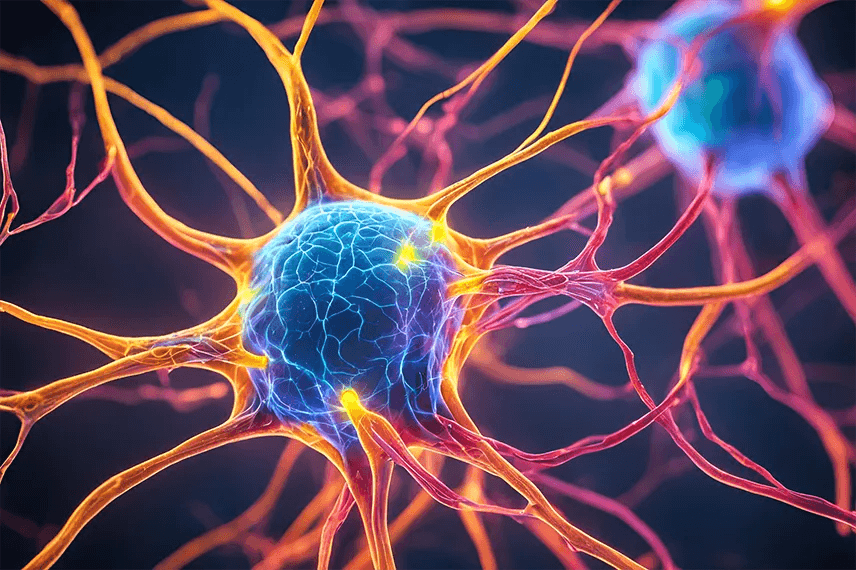
“This process actively weakens the deeply encoded subconscious patterns responsible for cravings.
According to researchers, this neurological “rewiring” happens through three powerful mechanisms:
First, hypnosis enhances neuroplasticity, creating ideal conditions to restructure craving circuits quickly.6
Second, carefully timed hypnotic stimulation triggers memory reconsolidation, actively weakening alcohol-related memories and reducing craving.7
Finally, and most importantly, hypnotic methods rebalance your emotional center and rational decision-making cortex.8
Clinical studies show nightly hypnosis sessions can help up to 77% of people stay sober long-term, with some reporting success rates as high as 90%.9 10
The best way to benefit from hypnosis is simple,” Dr. Brooks reveals.
“By listening to carefully crafted sounds or suggestions just before bedtime.
When tailored to your neurological patterns, these nightly sessions effortlessly neutralize cravings directly at their subconscious source.”
But there is a serious catch. YouTube recordings and other non-personalized clips don’t just fail – they backfire. Here’s what you should do instead.
Random hypnosis sessions or generic audio clips from YouTube won’t solve your cravings.
In fact, they can sometimes make them worse.
“Neuroscientific research shows that generic hypnosis lacks the specificity required to target your unique subconscious patterns.11
Instead of weakening craving pathways, general sessions can unintentionally reinforce negative associations, intensifying your subconscious urge to drink.
“I’ve seen this happen with clients who genuinely wanted change,” Dr. Brooks says.
“One woman I worked with tried multiple online recordings. She liked the idea of hypnosis and found the sessions relaxing, but nothing shifted long-term.”
“The issue wasn’t commitment. It wasn’t belief. It was that generic recordings simply cannot target individual subconscious patterns.”
Most importantly, audio compression on popular platforms makes precise neural modulation impossible.
“Neuroscientific research shows that non-personalized hypnosis lacks the specificity required to safely target your unique craving circuitry.¹¹”
“Instead of weakening those pathways, general sessions can unintentionally reinforce stress-linked associations, intensifying the subconscious urge to drink.”
So, what’s the solution?,” Dr. Brooks asks.
According to Dr. Brooks, the only safe and scientifically reliable approach is fully personalized hypnosis.
“That’s why I recommend the Kure App to my clients – it’s a neuroscience-based system that creates personalized hypnosis sessions.
They are fully matched to your specific neurological patterns using validated protocols based on clinical studies.
Each session leverages precise hypnotic stimulation proven to trigger memory reconsolidation and recalibrate neural circuits effectively.
All you do is listen to carefully crafted sessions before bedtime to target your cravings at their source.”
“I get why you might lean toward traditional solutions. Especially at the start of a new year, when motivation is high but willpower is fragile.
“I get why you might lean toward traditional solutions. But would it be smart to ignore Stanford research? I made it painfully easy to start, so you can test this approach.”
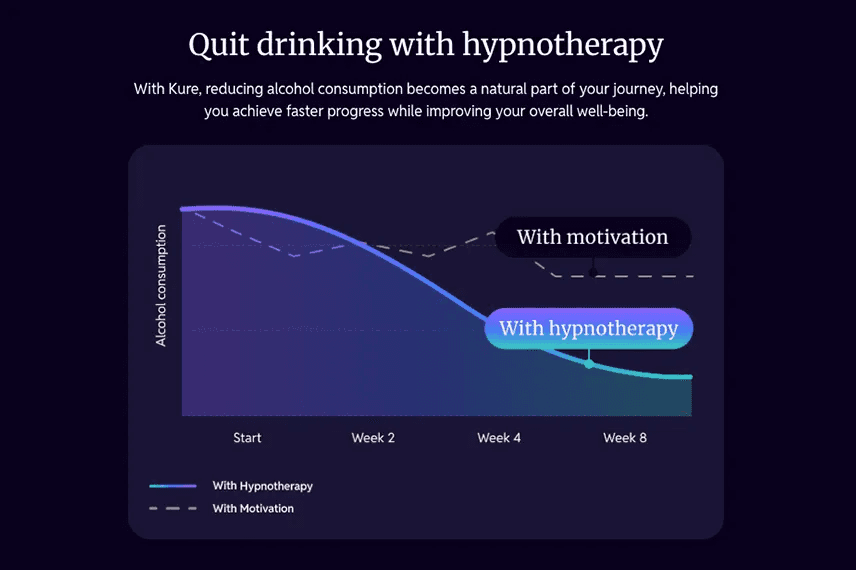
Just take a simple quiz about your lifestyle, drinking patterns, and goals.
Immediately after, you’ll get a simplified, personalized timeline.
It’ll show how quickly you can free yourself from cravings – based on experiences of similar users.
Then you can unlock your tailored program. It will include:
An intuitive digital app created by experts in neuroscience, hypnosis, and psychology.
Personalized daily hypnotherapy sessions to listen to before bed.
Complete 24/7 support whenever you need guidance.
Easy-to-use progress tracking to keep you engaged.
Thousands have flipped the ‘Brain Switch’ and most felt relief by day six.
You have everything you need to free yourself – and make 2026 the year alcohol no longer controls your evenings.