Neuroscientist and Psychologist Agree: This 15-Minute ‘Confidence Reset’ Rewires Every Brain That Won’t Shut Off (Most Do It Wrong)

Our readers have been flooding our page with questions about “daily affirmation” routines for building success, confidence, and resilience.
High-profile figures like Reese Witherspoon1, Jennifer Aniston2, Matt Damon3, and numerous others have credited these practices.
Leading research institutions like Stanford University, Harvard Medical School, and the National Institutes of Health (NCCIH) have studied hypnosis and how it can alter brain activity.4,5,6
So, I contacted two specialists: Dr. Elena Strauss, a neuroscientist, and Dr. Daniel Foster, a clinical psychologist.
“Low self-esteem and negative self-talk are at epidemic levels today.
Research shows nearly 85% of adults struggle with feelings of inadequacy at some point in their lives,”7 Dr. Strauss explains.
“The average American spends over $1,000 per year on self-help books, coaching, or therapy — yet most still feel stuck in cycles of self-criticism,”8 Dr. Foster adds.
They agreed: this may be one of the important breakthroughs in modern mental health.
3 truths about your brain & why this stress reset works so well
Both experts began by breaking down the science behind their insights and highlighting some essential facts.
Truth #1: Your brain believes what you repeat — and rewires itself accordingly
“Every emotion, belief, and sense of identity is tied to what we see and hear, but most importantly, what we tell ourselves — and that leaves measurable traces in the brain,” Dr. Strauss explains.9
“Neuroimaging studies show that daily affirmations activate reward and self-processing regions of the brain, the same regions that evaluate confidence.”10
When those systems are fed negative self-talk, the result is a mind that reinforces self-doubt.
But when positive affirmations are practiced consistently, they begin to overwrite those limiting patterns.
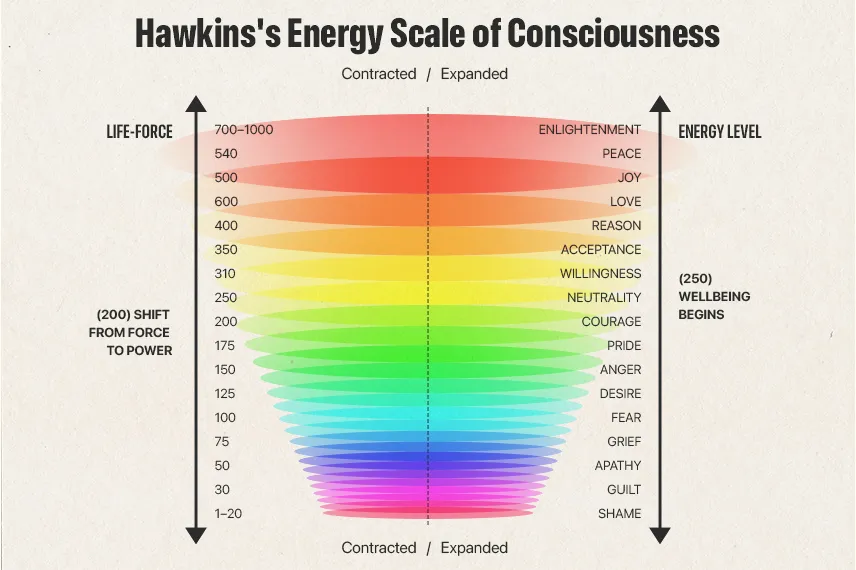
Models like the Energy Scale of Consciousness visualize this: shame and fear sit at the lowest levels, while courage and acceptance occupy higher states. 11
When you practice daily affirmations, you’re not just ‘thinking positive’, you’re climbing this scale and improving resilience, confidence, and well-being.”
Truth #2: Comparison culture reinforces negative self-talk
“Your brain isn’t built for endless social comparisons, reels showcasing perfect lives, and workplace pressure,” Dr. Foster says.
“These inputs don’t just lower your mood — they actually reinforce neural pathways of self-criticism and inadequacy.”
Research confirms that exposure to stress and social comparison alters how the brain processes problems.
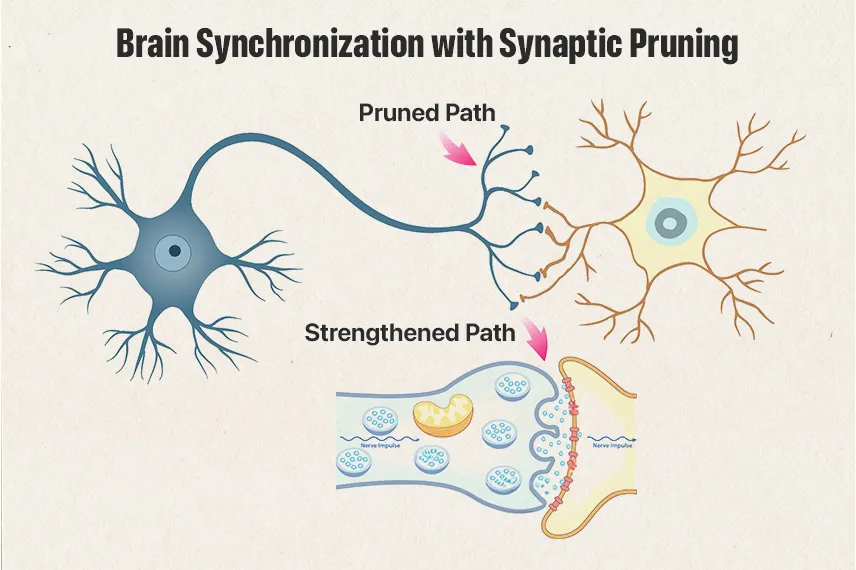
Dr. Strauss explains that this is tied to a process called synaptic pruning — where your brain literally “trims away” the connections it uses less often. 12
“If self-doubt dominates your daily thoughts, those neural links get reinforced, while healthier pathways weaken. Over time, your brain wires itself to default to criticism,” she says.
Research confirms that exposure to stress and comparison intensifies self-doubt and alters how the brain processes mistakes.13
Truth #3: You can’t force your way out of negative self-talk — it requires a daily practice
You can’t willpower, medicate, or rationalize your way out of entrenched self-criticism — these methods don’t directly reshape the subconscious beliefs.
“This issue lives in the loops your brain runs every day,” explains Dr. Strauss. “That’s why it needs a steady, daily practice.”
For this reason, affirmation-based methods — especially when combined with self-hypnosis or guided meditation — are now attracting serious attention from psychology and neuroscience.
Daily affirmation practices showed consistent benefits: boosting self-esteem and reducing stress reactivity in weeks.14,15
“A recent review of affirmation-based interventions confirmed improvements in self-esteem, resilience, and goal achievement across multiple groups.
This isn’t just motivational fluff — it’s gaining ground as one of the most promising, non-invasive tools in modern psychology, with a growing body of research.
– Dr. Elena Strauss, neuroscientist
“I’ve seen it firsthand. This method turned out to do wonders.”
“I came across structured daily affirmation protocols early in my work.
What once seemed like a self-help trend has actually been practiced for decades, and more recent studies have confirmed it can create measurable changes in neural response.
Self-affirmation practices could measurably boost self-esteem, reduce stress reactivity, and even activate reward circuits in the brain within minutes,” he says.16,17
“I managed to adapt several of these evidence-based affirmation scripts and started using them with my clients.
The results were unlike anything I’d seen before,” Dr. Foster says.
“Even people who hadn’t responded to years of therapy noticed a real shift in their confidence and self-talk after just a few sessions.”
But why are you unlikely to get results from random internet quotes or affirmations
“Affirmations on YouTube or Instagram often look pretty, but most are either too generic, poorly worded, or inconsistent,” Dr. Foster continues.
“The science is clear: affirmations only work when they’re personalized, emotionally resonant, and repeated consistently.
Moreover, many free affirmations are paired with distracting music or lack structure—it’s just background noise.”
Bringing it back to synaptic pruning, this becomes crucial: without structured repetition, those positive circuits simply won’t stick.
Just like unused branches get pruned in the brain, generic affirmations fade before they can take root.
Even when labeled as “daily positive affirmations,” they usually miss the three key elements:
personal relevance (anchored in your values);
proper phrasing (present tense, believable statements);
consistent repetition.
By contrast, dedicated affirmation platforms provide carefully crafted, scientifically aligned scripts, delivered with consistency to actually shift neural processes.
From Ivy League labs to real-life results — and an exclusive reader offer
Research at Harvard, Stanford, and Columbia first revealed how affirmations activate brain regions tied to reward and self-worth.
That science now fuels a new wave of affirmation platforms putting the findings into practice.
One of them contacted us directly — and created a special offer just for Health Guardian readers.
What stood out most, though, were the results users reported:
93% feel an immediate boost in positivity after their first session
87% notice calmer, more supportive self-talk within 15 minutes
and 90% report lasting improvements in self-esteem after practicing regularly
The platform is called Kure, and it’s built entirely around hypnotherapy and personalized daily affirmation routines.
Using a short diagnostic quiz, it maps your self-esteem profile and assigns sessions and affirmations that directly counter your negative self-talk.
It guides you through a structured daily ritual — no effort needed.
Sessions are short and can be done anytime, on any device. All you have to do is subscribe to receive a free gift — a 21-day confidence challenge filled with daily affirmations for you!
You risk nothing. It costs far less than years of therapy — in fact, less than a cup of coffee a day.
“It was incredible to watch,” Dr. Foster says.
“Kure didn’t just help their confidence—it helped them truly feel in control of their lives.”
But, as Dr. Strauss says herself…
“Don’t take my words for granted, try it yourself.”
